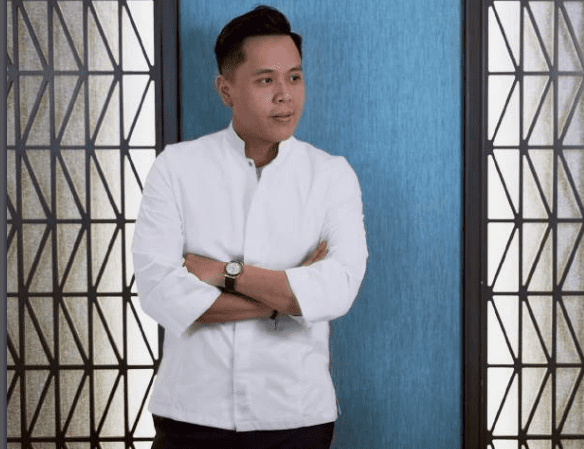
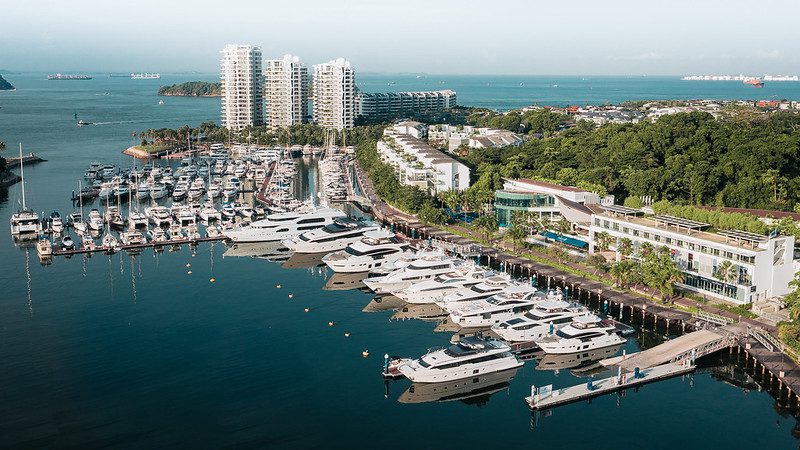
Chef Desmond Goh is only about eight months old at ONE°15 Marina Sentosa Cove, but he is no stranger to Members. As Executive Chef and Head of F&B, they know he has a hand in every dish and tipple they relish in every restaurant, bar and event at the Club.
Since coming on board, Chef Desmond has introduced Monday specials, and exclusive wine-, sake- and truffle-paired dinner events as well as 7 Wonders of the World, which explores the cuisine of seven different countries over a period of seven months.
Trained at the prestigious Le Cordon Bleu in Paris, he describes his style as eclectic. “I wouldn’t want to tie down my style to any boundaries of cuisine,” he explains. “I have trained under numerous Michelin star chefs including Hiroki Yoshitake, Nathan Outlaw and Mads Refslund—so the influences have extended from JapaneseFrench, to British and Nordic cuisines. What I like to do is blend what I’ve learnt from them with various ingredients to create something that is uniquely mine,” he says.
Chef Desmond himself was listed in the Michelin guide in 2017 for modern European restaurant, The Disgruntled Brasserie.
the total turnaround
One would think that Chef Desmond grew up dreaming of becoming a chef. But, what he wanted was to be a law enforcement officer. “I was not very good in studies; not because I couldn’t, but because I wouldn’t,” he says, explaining why his career path was steered in a new direction.
However, Chef Desmond quickly turned his life around after his National Service—it not only instilled strict discipline in him, it changed his life. He decided to get into the culinary world, and started his journey at hospitality school, Shatec—which he paid for through a bank loan his father stood guarantor for, and by working in the kitchens of Chinese restaurants. His father wanted him to prove that he was ready to get serious in life, and Chef Desmond proved it in spades by also earning a scholarship awarded by Far East to study in Le Cordon Bleu.
His stint after Shatec was probably the most exposure he got of Chinese cooking styles, although growing up, he recalls helping his mother and late grandmother make Peranakan cookies, tarts and kuehs during the annual festival time. “My late grandmother was a very good cook. My mother, a better baker than a cook. I still call her for advice and ask her to dig up some of my late grandmother’s recipes,” he says. He leveraged this access and clubbed it with organic ingredients for the Club’s festive offerings for this Chinese New Year—“we sold almost 700 jars of pineapple tarts”.
“I wouldn’t want to tie down my style to any boundaries of cuisine.”