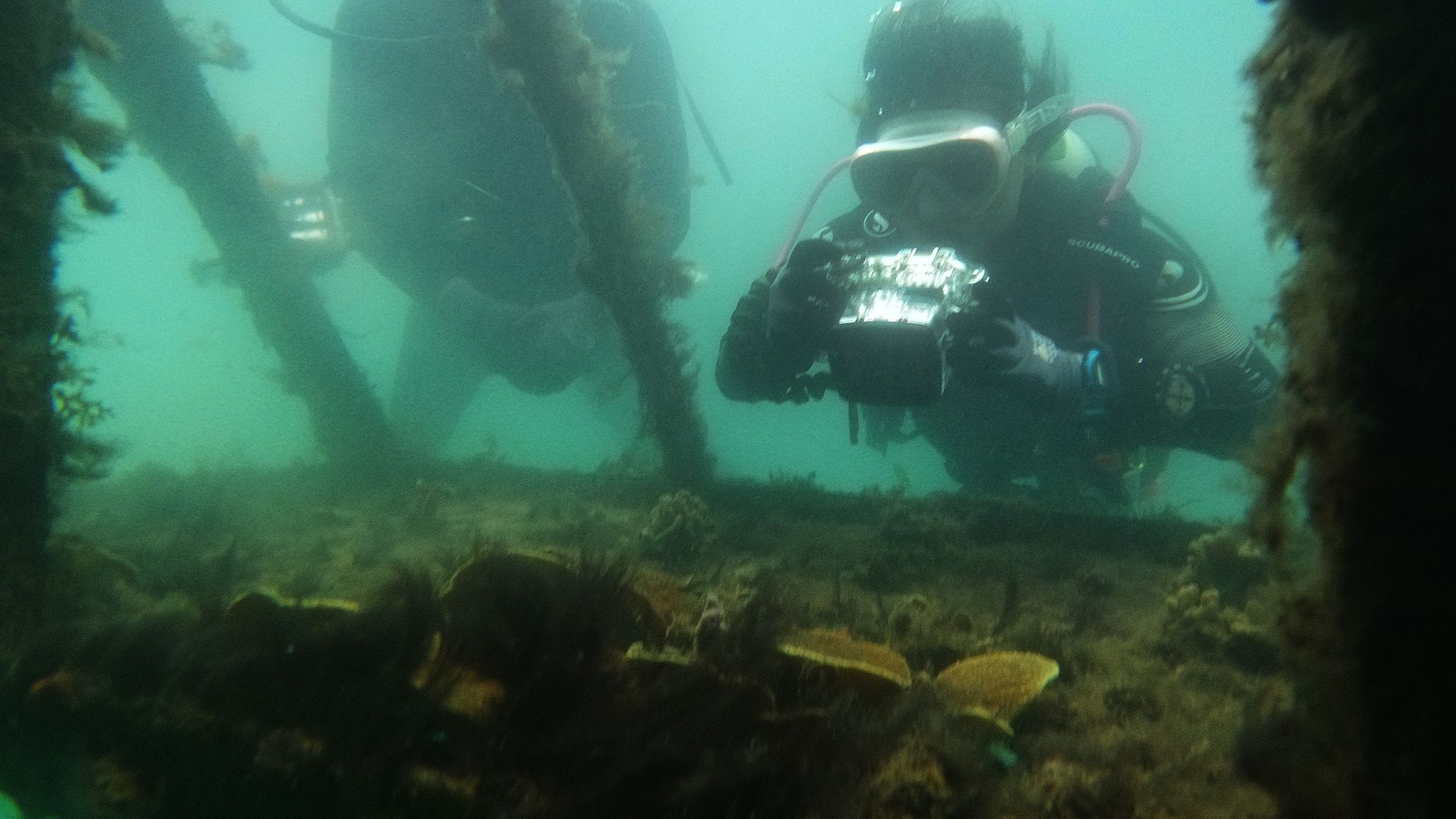
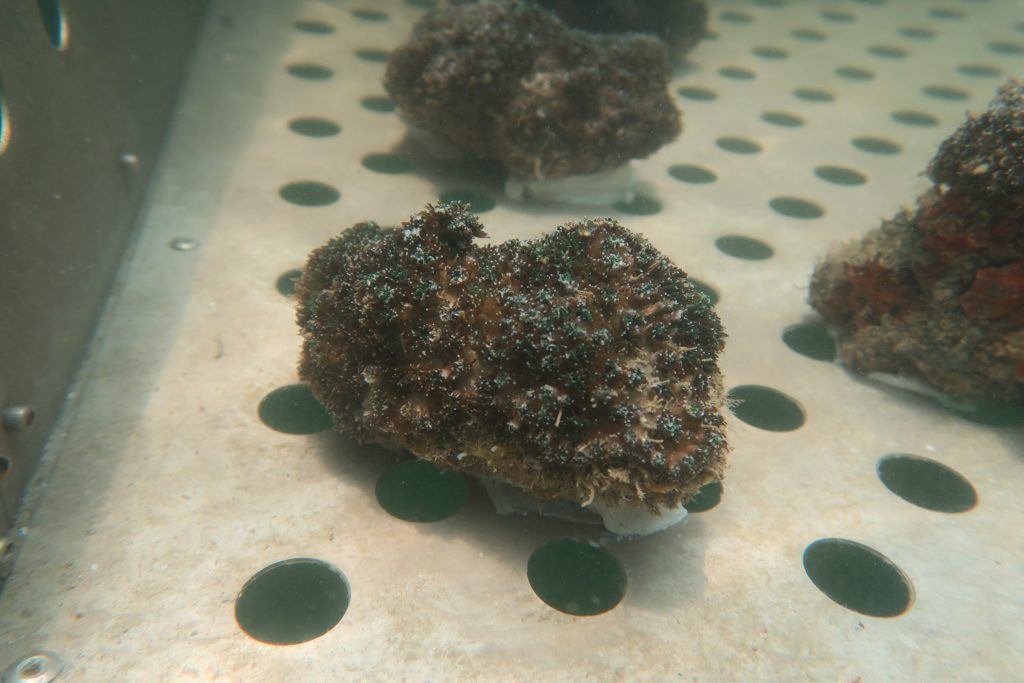
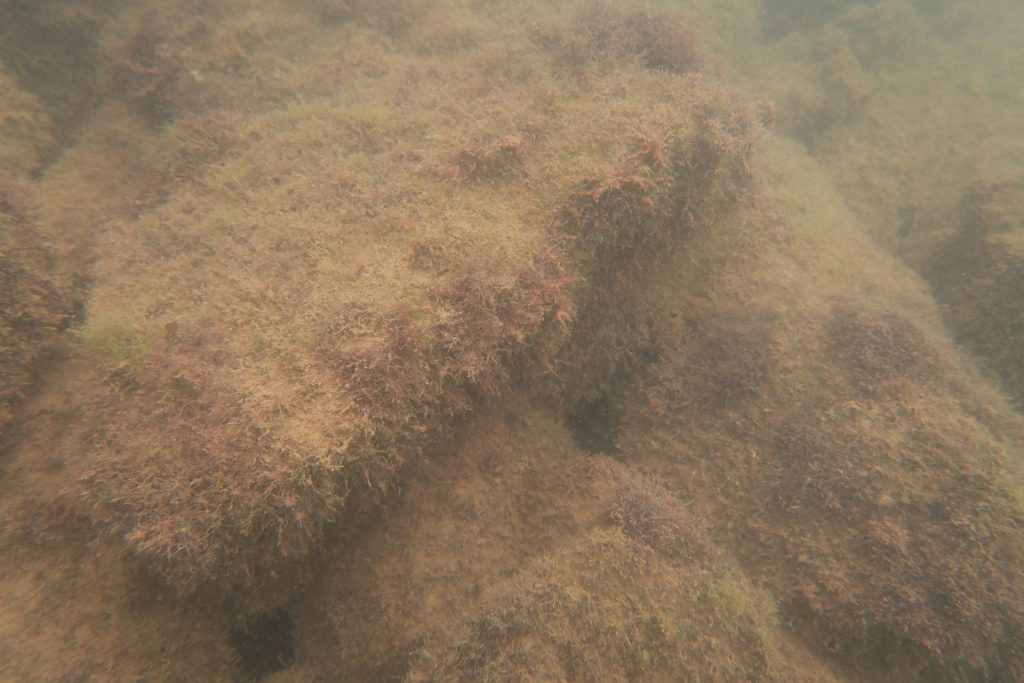
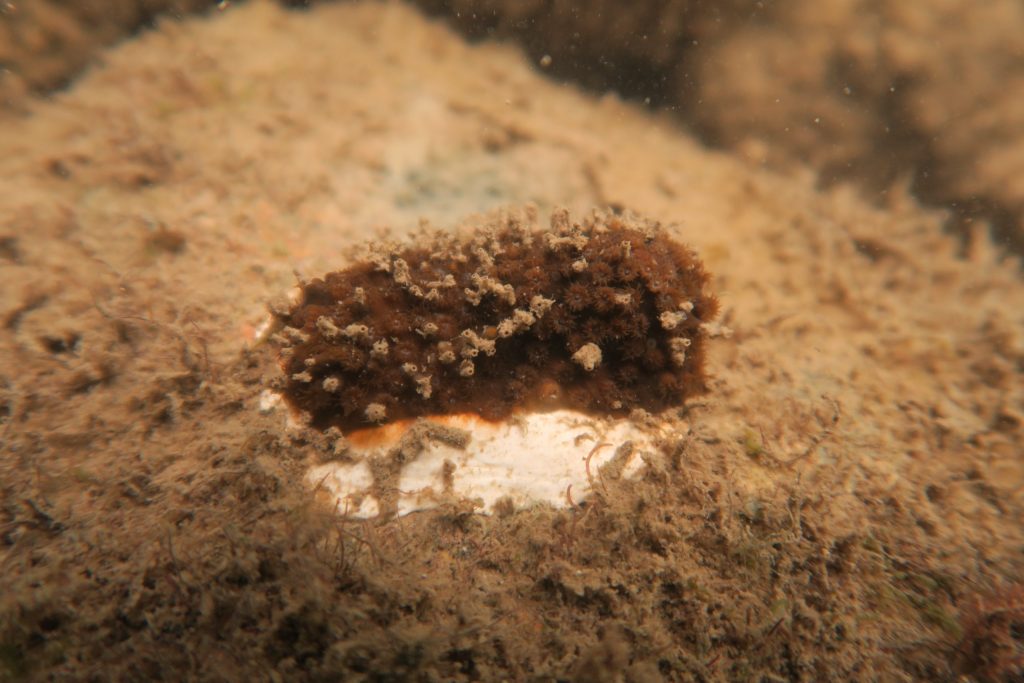
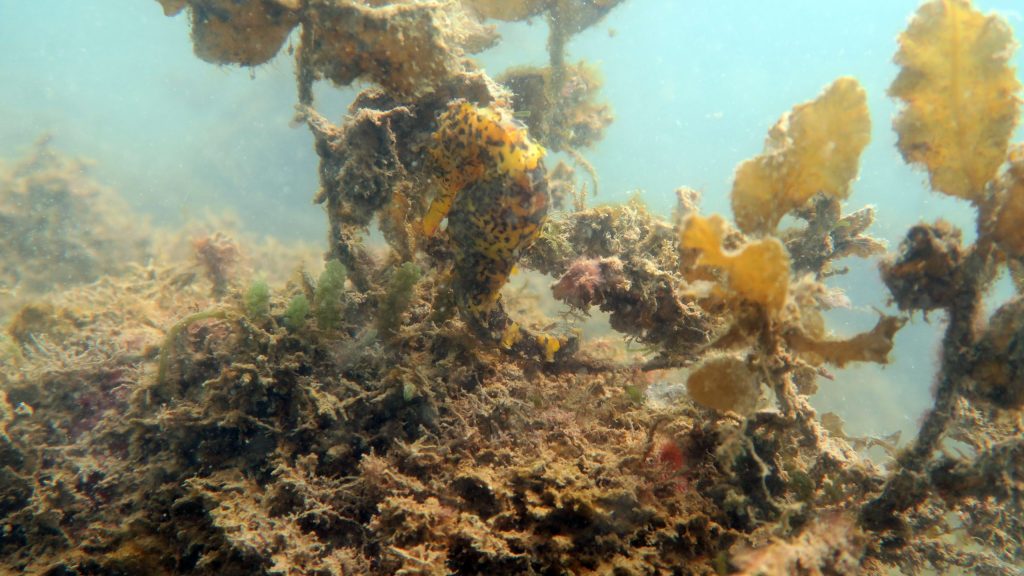
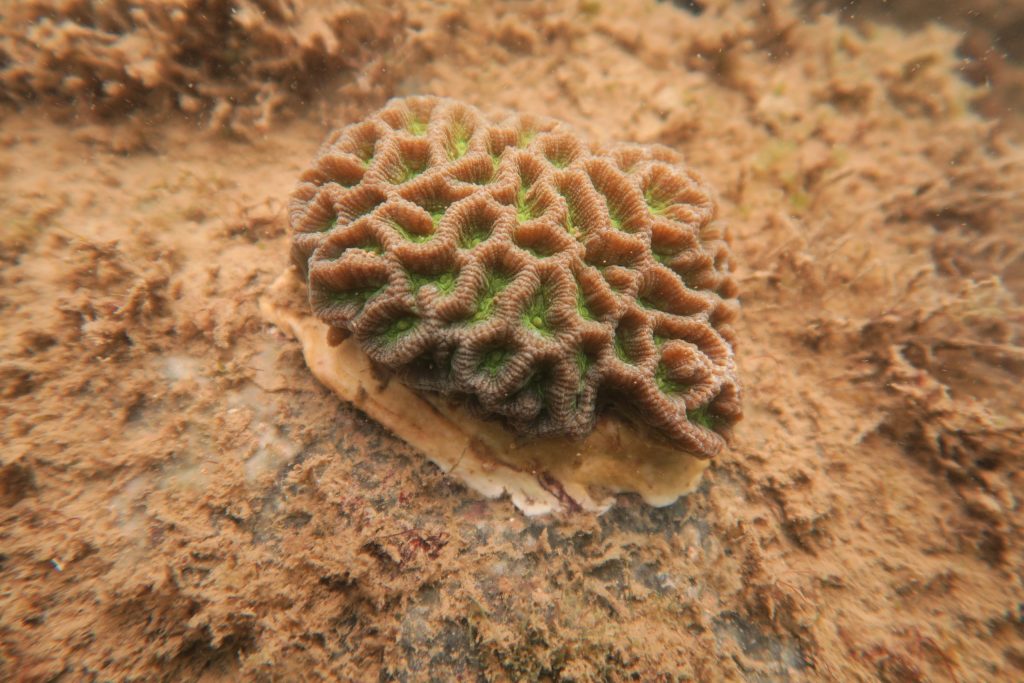
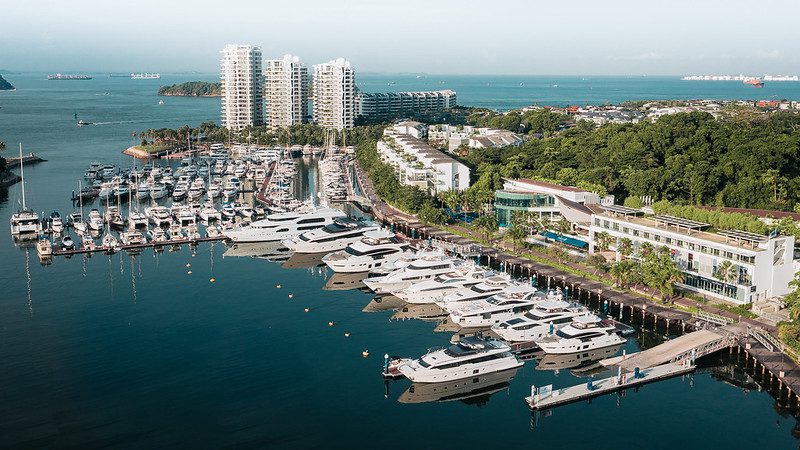
From the visual assessment of the marina’s marine life and underwater conditions, we devised a plan to transform plots of barren granite rocks into a vibrant coral garden. To rebuild the coral communities in the marina, we employed the coral gardening technique, in which corals are first reared in nurseries before being transplanted back onto the seawalls of the marina. The coral nurseries were specially designed to suit the marina’s unique environment. By hanging the coral nurseries along the floating pontoon, the reared corals would be constantly submerged at an optimum depth despite changing tides, and the seabed area can be maximised to populate the marina with more corals. The large base of the coral nurseries created additional space for marine life to colonise. The coral nurseries were also perforated to facilitate good water flow around the structures and reduce sediment accumulation that may smother the corals.
With a green basket looped around my right arm, I went searching for corals that were half-buried in the seabed or stuck in between rock crevices. These were loose corals that had been dislodged from the granite rocks or the parent colonies by wave actions, marine animals or human activities—and would have perished if left on their own. Picking up my hammer and chisel, I carefully fragmented each rescued coral into smaller finger-sized pieces and placed them back into the basket.
Then, we scrutinised each fragment and handpicked suitable ones for nursery rearing. We assembled the coral fragments in neat rows before securing them with putty-like adhesive on the coral nurseries.
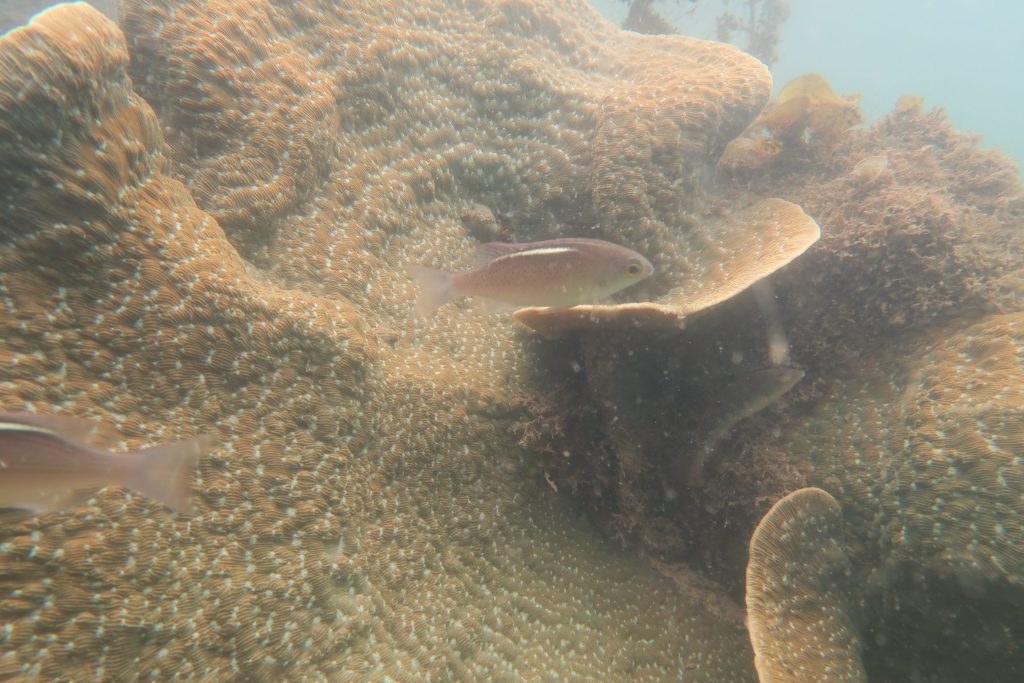
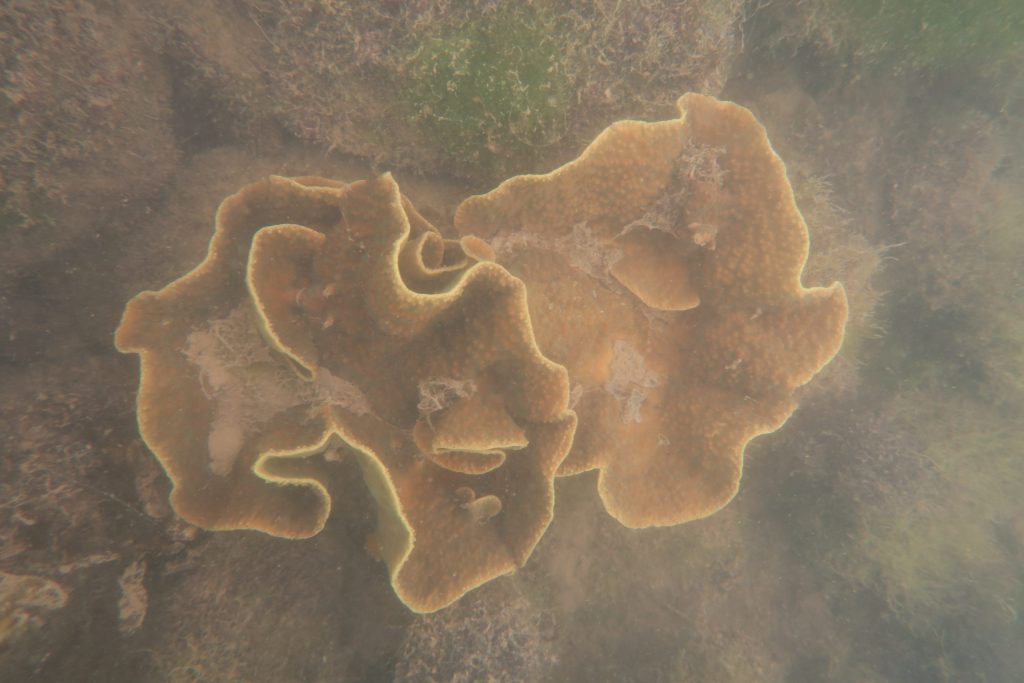
Like weeding a garden, the coral nurseries were maintained regularly by removing overgrown seaweeds around the corals and the structures. In about three to six months, nursery-reared corals that had grown to a palm-size were harvested for outplanting. In a bare spot a few metres away from the coral nurseries, we scrubbed off all algae and sediments on large granite rocks before attaching the corals on them. We have planted over 230 corals of various species and growth forms, populating the marina’s coral garden. Following the transplantation, we returned regularly to review and document the corals’ growth and survivorship. So far, most of the coral colonies appear healthy. Our transplantation efforts have contributed more than 2m2, which is about the size of a super single bed, of live coral area to the marina. That is sizeable considering that corals grow 0.3cm to 2cm a year for massive corals, and up to 10cm a year for branching corals.
During some of our monitoring dives, we have spotted pairs of butterflyfish nibbling on the coral transplants and marine creatures, and seeking refuge among the corals’ branching structures. Larger marine animals such as Rafael the hawksbill turtle, otters, groupers and even an eagle ray have also been sighted cruising around or using ONE°15 Marina Coral Garden as a hunting ground. When the tides were low, its newest secret unveils itself. Neat clusters of green-, orange- and bronze-coloured corals form a trail lining the base of the marina’s northwestern seawalls, with schools of playful damselfish weaving around.
The findings from our research have also indicated that the coral garden initiative by the marina has the potential to complement other local habitat restoration efforts by researchers and policymakers to safeguard our marine biodiversity.
The upkeep of ONE°15 Marina Coral Garden is currently undertaken by volunteer scientists from Reef Ecology Laboratory and divers from Our Singapore Reefs. Coupled with the marina’s commitment in promoting environmental stewardship through its operations and public engagement efforts, we are sure that the coral garden will become a haven for marine life to flourish and thrive.