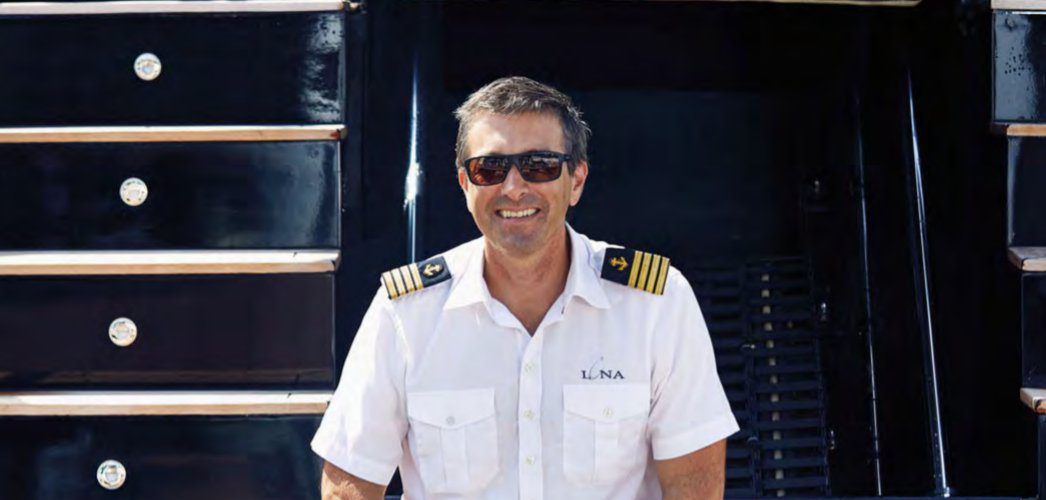
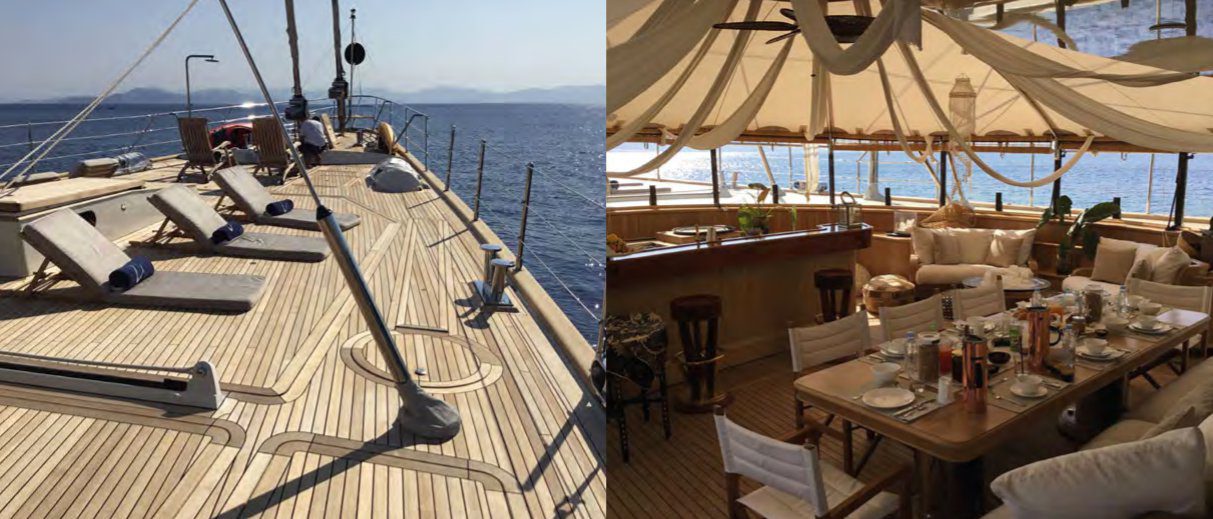
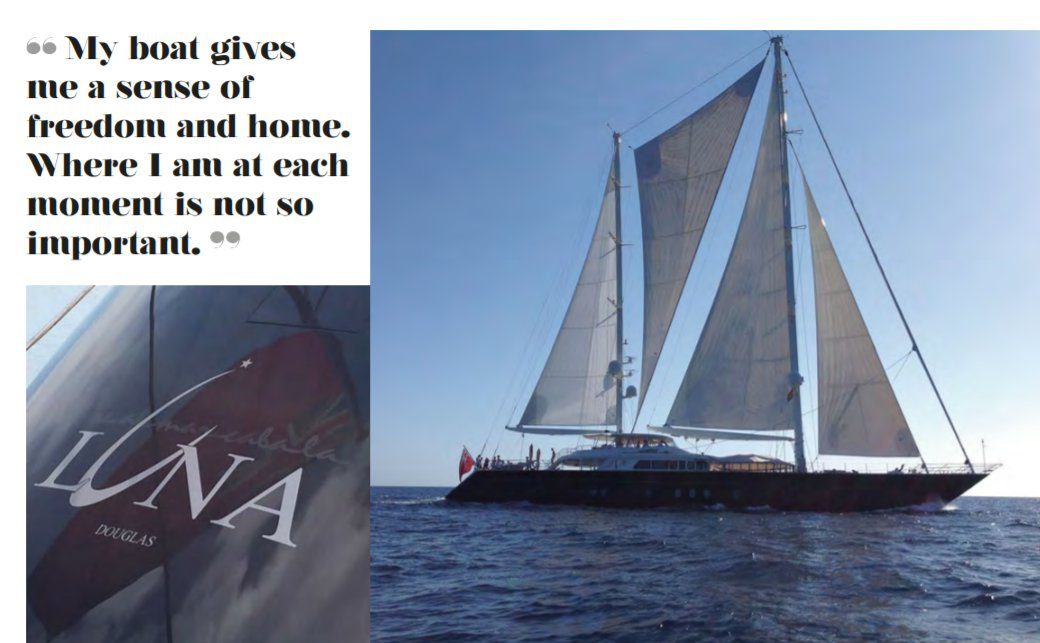
Captain Cafaro typically proposes destinations and works out a loose itinerary with the owner, his wife and three sons. However, according to him, this itinerary changes 99 per cent of the time, mid-course—one of the luxuries of owning your own yacht. One of the owners’ favourite vacation spots in the Mediterranean Sea is Greece, because of its beautiful islands, clear water and gorgeous summers.
“There aren’t many boats or jet skis. If you leap from the boat, you can swim without fear of sharks or dangerous sea creatures such as jellyfish, which you can’t do in Polynesia, New Zealand or Australia,” he explains.
“Symi island has a special atmosphere—you can find a traditional village with 200- to 300-year old little houses and buildings. Milos also has a rich history. If you go for a walk or cycle, you will stumble upon beautiful little churches and ancient buildings,” the captain adds.
That said, sailing is not all sunshine and soft breezes. Though the enhanced connectivity of today has made it easier to avoid storms, the captain has encountered his share of bad weather. Luna faced its worst storm from the Caribbean to Panama, where large rivers along the Colombian coastline created irregular waves. Water seven metres high rushed at it from its port side, and a gale pushed from the back of the ship threatening to capsize it.
The 53m-long Luna might be expected to withstand this storm. However, the real problem was that when departing from Antigua, there weren’t any available cranes to load the tender onto the yacht. As such, it was attached via two lines and towed behind the yacht. This storm easily snapped the lines, carrying the tender away into the waves.
“We immediately drew the sails, turned 180 degrees and chased the tender through the storm,” says Captain Cafaro. “As soon as we found it, we put Luna between the wind and the tender, and one of my crew members jumped onto it. We were 15 miles north of Colombia, so he braved two hours of storm to make his way to shelter there. Because Luna could not sail in shallow water, we arrived four hours after him.”
“The problem was that my crew member had nothing with him—no visa, no passport. If the authorities found him before me, he could get into very big trouble. So before reaching Colombia, he switched off all the lights of the tender and waited in the darkness. It felt a little like a drug operation—we were very worried,” he laughs.
Reaching Colombia utterly spent, the captain asked if he could drop anchor for a couple of hours to seek shelter. The request was denied. So in the storm, the crew hurriedly reattached the tender and headed back into the choppy waters at the crack of dawn, sailing for another three days before reaching Panama.